Thanks to Judy McGinnis for helping us redesign our official museum brochure!
You can download the brochure HERE:
Also thanks to Ray at My Friend The Printer for the speedy printing job on our first order of 300. They look great:


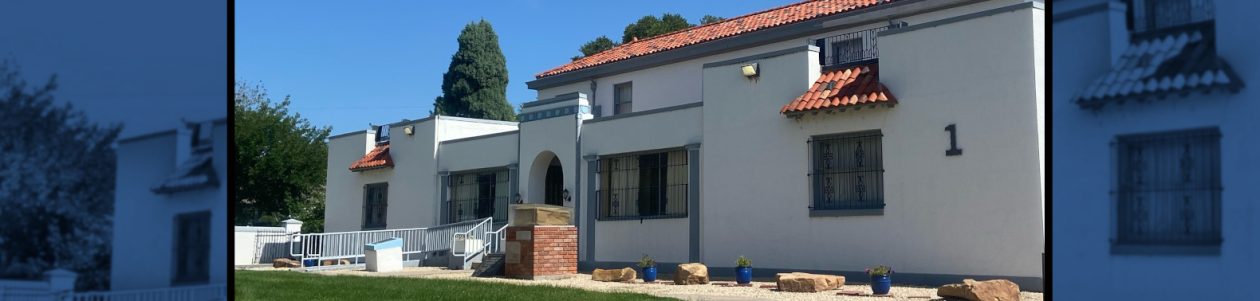
Thanks to Judy McGinnis for helping us redesign our official museum brochure!
You can download the brochure HERE:
Also thanks to Ray at My Friend The Printer for the speedy printing job on our first order of 300. They look great:
I’ve been spending some time now and then on trying to solve the mystery of the Colorado State Hospital cemeteries.
Some research does best if you give it a lot of time. On this topic I want to take my time and let it organize itself in my brain (during a good night’s sleep, usually). When I get more of a handle on this I’ll probably write it all out, either in a Pueblo LORE article, or in a book–or both.
Cemetery #1 was not the cemetery they excavated in the 1990s and 2000s. That was cemetery #2.
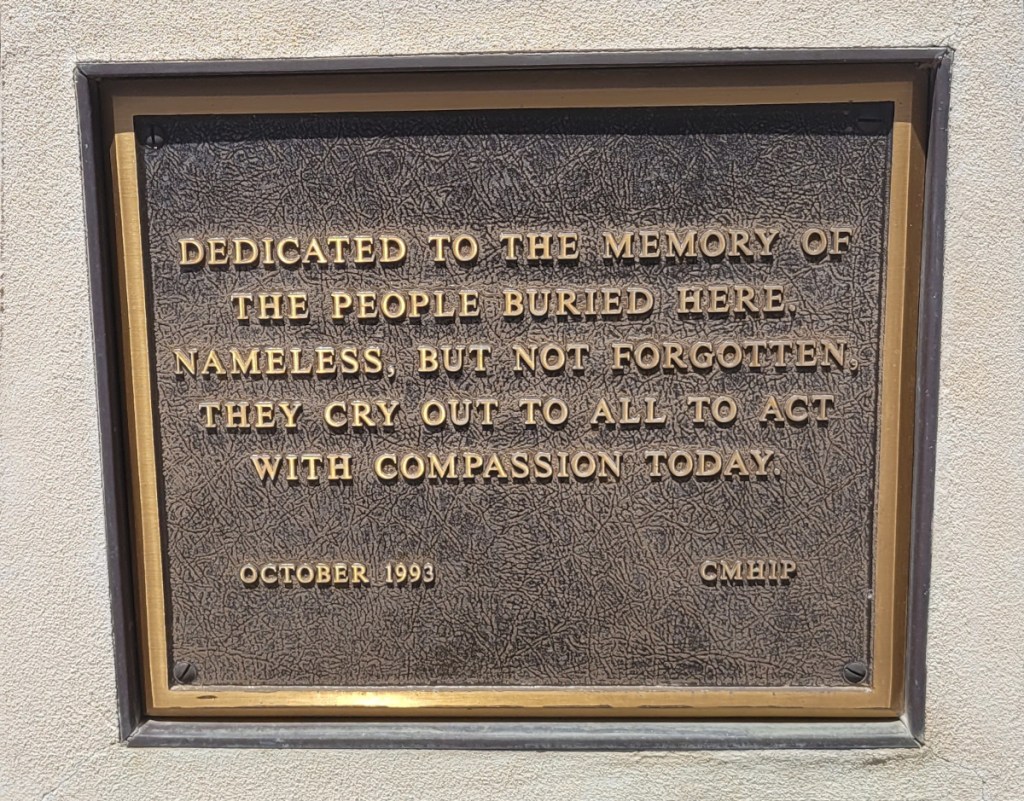
Cemetery #1 was left alone. It’s exact location is really unknown, but it was known to be near the power plant of the state hospital. They did, however, create a little monument for it. A while ago Nancy Hall and I ventured out to find it (Nell had pictures of it in the archives, but we wanted to see it in person).
Here it is. I took these pictures of it on a beautiful Summer day:

And here’s a closeup:
The location on Google Maps is HERE.
NOTE: I should be posting on here more often, as it has been quite busy at the Museum this Summer. Of course, that’s also sort of an excuse as to why I haven’t been posting that much. But we have a new volunteer (Barbara), who is awesome, a new intern (Olivia) who is awesome, and we have collectively done a lot of work, along with Nancy, making improvements to the museum, which was already a hidden treasure.
We know have three to five short videos easily shown to museum patrons. These range from a short documentary on the state hospital dairy farm to short documentaries that allow the viewer to see the hospital in 1964–complete with footage of patients and staff members in the first few years after decentralization. This was a time when mental health practices were changing at an almost alarming rate.
Barbara is a great addition to our team, having worked in the mental health field. She has been helping me to understand the big picture on subjects like what occurred around the time of decentralization.
I’m still surprised Barbara didn’t get my reference to The Night of the Living Dead….
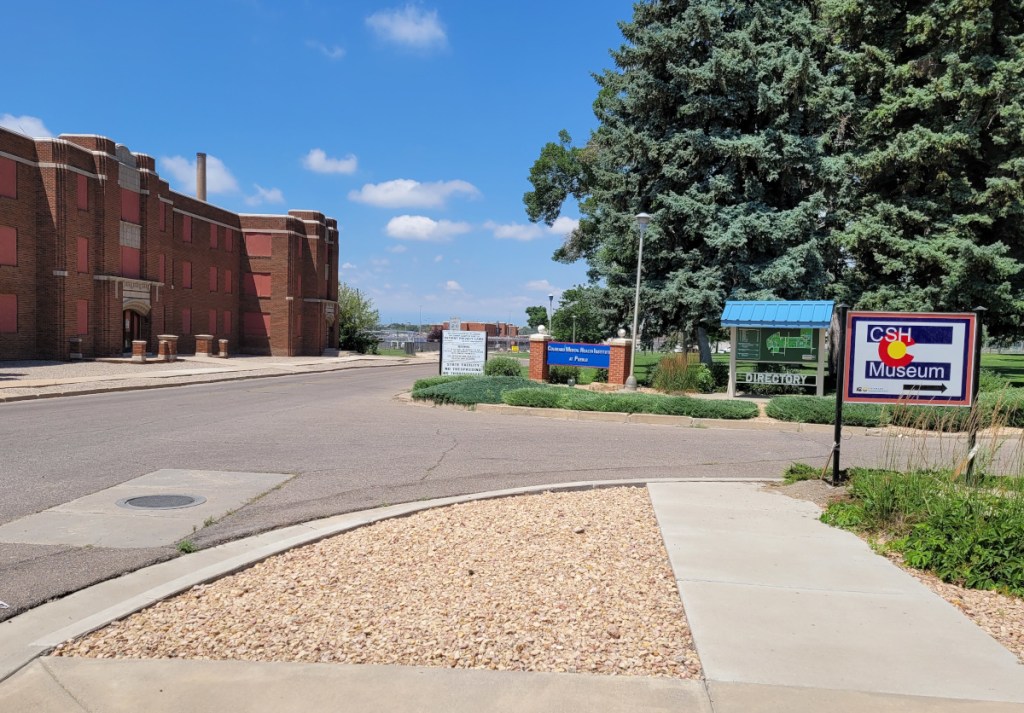
Our new signs outside of the museum are finished and installed! Here’s the sign at the entrance to the museum (at 13th Street and Francisco):
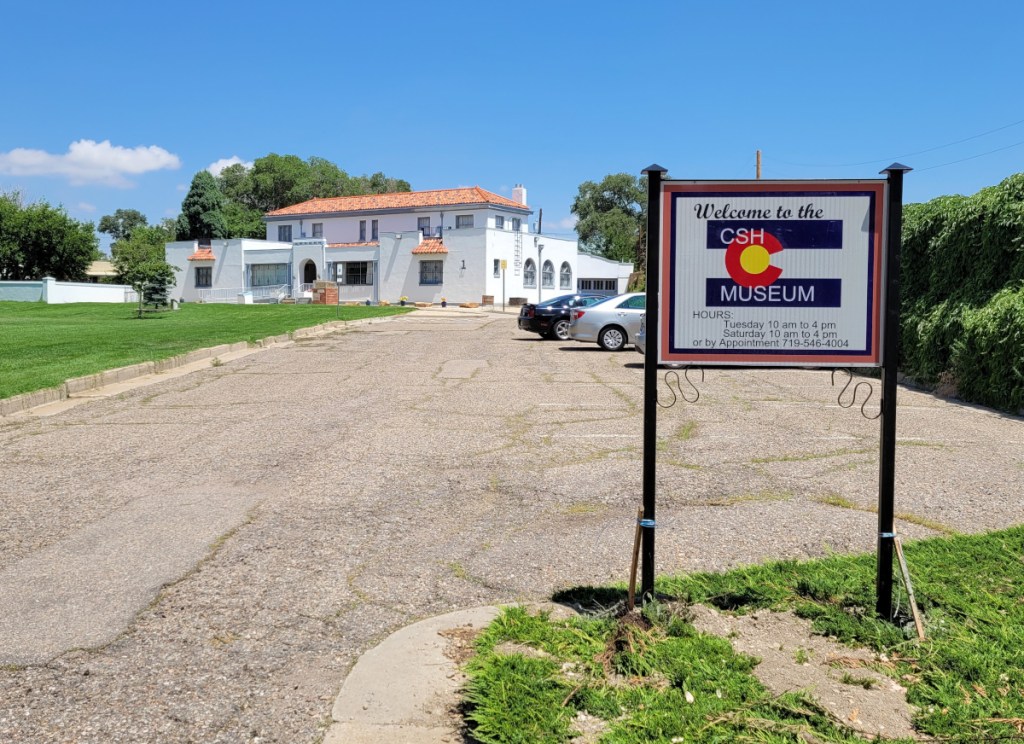
And after you turn right and approach the museum, you will see this new sign right in front of our parking lot:
We have been busy at the museum lately, making these and other improvements. We would love to see you discover us or return for another visit!
I don’t use social media much. I have no Facebook presence, I think I’ve maybe made at most 3 tweets, and I definitely don’t TikTok.
I do, however, have a long history of following Hacker News. I was a lurker for years before I created an account. I decided to join the community recently and was pleasantly surprised when a former student of mine responded to one of my comments on Comp Sci education.
Recently the Hacker News front page featured a web site dedicated to “niche museums.” I felt I had to comment and mention OUR museum, which is basically run by 3 people, including me, and the help from student interns from time to time.
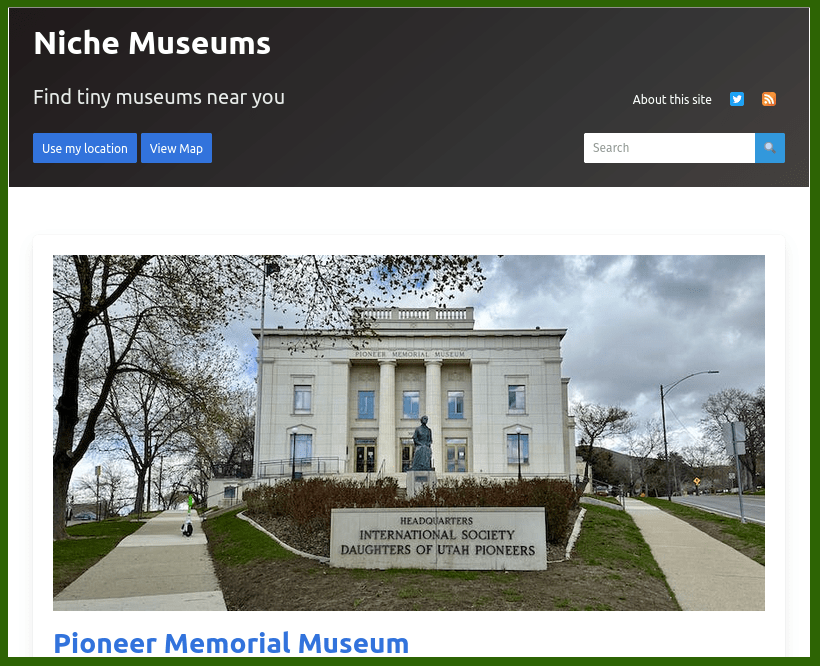
Turns out the NICHE Museums site was created by Simon Willison, who is the co-creator of the Django Web Framework, something I actually used in the past.
Simon only features museums that he has visited, so I commented on the thread (my username is my old gamer tag: mFragin) that I would hope he’d consider coming to Pueblo and seeing our museum in the future. He actually responded and said he’d add it to his list of museums he plans on visiting! That made my … week!
I recently found an intake document for Moses Millsap, who was our first patient on Sept 23, 1879. I can’t figure out what the highlighted word is:

The rest I can read: “….of M.M. Millsap you will find with one Robt. Burke.”
That’s very interesting, because Robert Burke was another patient who came on that very same day. I wrote about these two individuals in my Pueblo Lore article: The First Eleven Asylum Patients (August 2022).
Robert Burke was quite the character and stayed at the hospital until he died in 1912. Well, he did escape at least once, but came back willingly after living in the mountains for a couple weeks.
My theory about the above document was that Robert Burke was in some way responsible for Moses Millsap, perhaps taking care of his possessions or something. Burke was a smart man, and I’d like to think he was looking out for a fellow inmate.
But that first word there is a mystery to me….
Okay, so I just heard from wonderful Judy McGinnis at the Pueblo County Historical Society and she found out the word is … “Mittimus”! It’s a “warrent of commitment”, usually to prison, but in this case, an asylum.
Moses was our first patient: #1. Robert Burke was technically #3, but only because he let two guys go ahead of him in line (I’m kidding–that’s total speculation on my part at this time)…. Well, at least that’s my updated theory on this. I’ll probably end up writing a book about these guys eventually, and this may be one of the clues to understanding them better.

Here’s a teaser for you! I was showing our museum DVD to someone recently, and she said, “why does it make it seem like a surprise when they found bodies in 1992 buried on hospital grounds?” She then showed me an image of a book written in 1985:

I had no explanation. Unlike a lot of people, when I don’t know the answer to a question, I admit it. I had no idea how this could be in this book, as I too had believed the common story that the 1992 excavation was a surprise.
So for the last week I have been trying to dig up the details on this mystery. I first came across a speech given by Nell Mitchell, the director and chief historian of our museum. In that speech she mentioned an incident in 1970, when human remains were discovered while digging on site for installation of a water pipe.
And, looking at old copies of the Pueblo Chieftain, I found several stories that mention secret burials on asylum grounds during the final years of Dr. Thombs (1888-1889).
It is an interesting story, and I intend to learn as much as possible about it. I’ve been to the county courthouse, poured through old newspaper stories, and am diving in to our box of documents in our archive about the 1992 and 2000 excavation projects. I plan on publishing a story about it in the Pueblo Lore, but I’m only in the early stages of research for it.
Yesterday I was delighted to finally meet Eilene Lyon in person. We have exchanged many emails in the past while researching former patients at the Colorado State Hospital. She also has contributed to our knowledge of Stephen S. Smith, an important figure in the history of Pueblo.
One thing we discussed was how frustrating it can be to try to get good research findings from various organizations. All too often you might have to pay upfront and then … well, receive things you had already found by yourself on sights like FindAGrave and ColoradoHistoricalNewspapers. If you are wanting to do some research on a former patient in the State Hospital, you can start on your own by visiting those sites.
That said, I understand fully that many people find those steps to be difficult–especially the old newspapers. There’s both an art and a science to actually finding what you’re looking for there.
So when someone comes in to our museum (or contacts us online or on the phone), I try to feel them out on what they already have found. I am more than happy to help them with the “easy” stuff. When helping Eilene, however, it was pretty clear that she had already done a lot of the first steps on her own. She was looking for the stuff you can NOT find online, and that’s what I want to discuss here.
You can find tips for researching relatives that have been in institutions for the mentally ill (their term, not mine) in guides posted by The National Archives, Family History Daily, and Julianne Mangin. They have some good advice and prepare you for the difficulty of the task.
However, as you start pursuing online information, you may get frustrated. For each link you find that seems to have some value, you will no doubt come across several others that simply want to get you to buy a membership or pay in advance for … whatever it is they’re selling. Be careful!
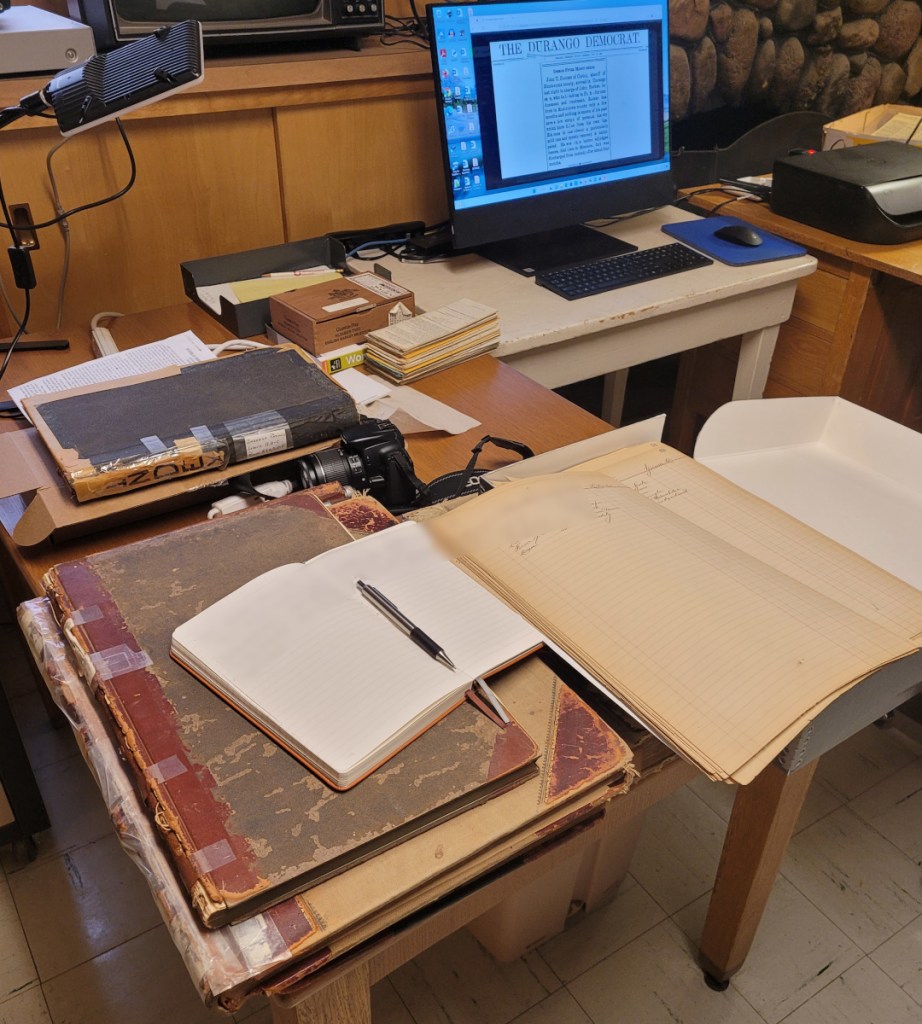
We have so many records in our archives that simply are not available anywhere else except in the old books they are written in. While it would be nice to have all of those records searchable in digital format, we simply don’t have the resources to accomplish that in the foreseeable future.
So if you’re having trouble finding things online, or have found all you can and want help in our archives, contact us!
Unfortunately at this time we are not set up to take credit card payments. We are sorry for the inconvenience.
Admission is $5.00 for adults. Children 12 and under are free.
Please bring cash for admission!
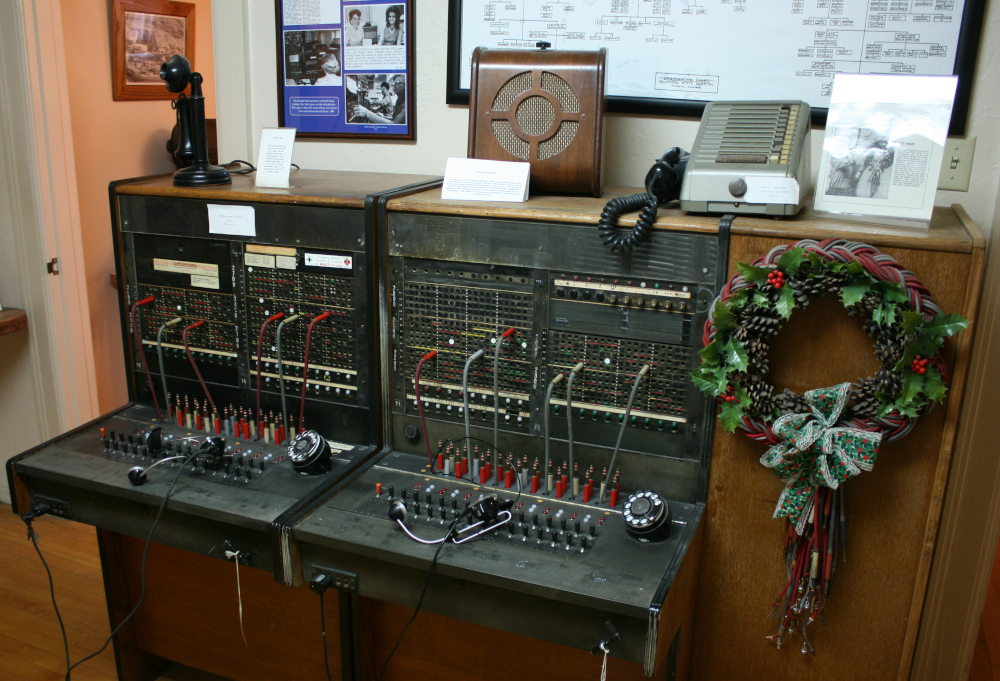
We have had many compliments about our museum this last year. Word seems to be spreading. If you’ve never visited our museum, please consider doing so. It is a real hidden gem.

These leg braces are in one of our most popular rooms here at the museum: the medical room. Because I cropped this image, you can’t quite see the autopsy saw that is located to the left, in front of the prosthetic legs. So you’ll just have to come visit us to see the autopsy saw!
This last Saturday when I was giving tours of our museum, one item really got a lot of attention. It’s part of our “Unclaimed Property of Patients” display on the second floor.

I added the yellow highlights to these images so you can see what it is. It is a very large Hohner Marine Band Echo Tremelo harmonica. In the next image you can see it up close. It makes the regular size harmonica in front of it seem quite small in comparison:

I am trying to learn a little more about this wonderful object.
 Colorado State Hospital Museum